10 Public Domain Stories to Turn into a Comic (and How to Adapt One)
Classic stories whose copyright has expired can be adapted, drawn and sold. Ten that make strong comics, how to check a story is really free to use, and a worked example: "The Necklace" in 21 pages.
The short answer
Short classics with a small cast and a strong ending make the best first comics: "The Necklace", "The Gift of the Magi", "The Monkey's Paw". Check the story is public domain where you will publish, and use the original text or an old translation.
A public-domain story is the easiest way to make a comic you are free to share and sell. The plot is tested, the characters are known, and nobody needs to give you permission. It is also a good way to learn adaptation on a story that already works, before you try your own.
What makes a classic adapt well
- A small recurring cast. Two to four people who appear again and again are easy to keep consistent; twenty named characters are not.
- Things happen on the page. A story told through events and dialogue becomes panels; one told through a narrator's reflections needs more invention.
- A few strong places. A house, a ballroom, a gate in the rain — places the story returns to give the comic a sense of continuity.
- An ending that lands in one image. A twist or a final reveal gives the last page something to aim at.
Ten stories that make strong comics
The Necklace
Guy de Maupassant, 1884
Short story · France
One woman, one borrowed necklace, ten years of consequences and a last-line twist. A natural single-volume comic of about twenty pages.
The Gift of the Magi
O. Henry, 1905
Short story · USA
Two people, one apartment, one Christmas Eve. Small cast and a famous ending — ideal for a first project.
The Monkey's Paw
W. W. Jacobs, 1902
Short story · UK
Three wishes and a knock at the door. Horror that relies on what you do not see, which suits panel-to-panel pacing.
The Tell-Tale Heart
Edgar Allan Poe, 1843
Short story · USA
A narrator insisting he is sane. Very short, one location, and perfect for close-ups and a dark style.
The Legend of Sleepy Hollow
Washington Irving, 1820
Short story · USA
A schoolteacher, a rival and a headless horseman. Strong visual set pieces and an autumn palette.
A Scandal in Bohemia
Arthur Conan Doyle, 1891
Short story · UK
Holmes, Watson and Irene Adler. Every Sherlock Holmes story is now public domain in the US, so this can start a series.
Strange Case of Dr Jekyll and Mr Hyde
Robert Louis Stevenson, 1886
Novella · UK
One man, two faces — a real test of character versions, with Hyde as a separate look.
The Yellow Wallpaper
Charlotte Perkins Gilman, 1892
Short story · USA
One room changing as the narrator does. A small, haunting comic built on a single recurring location.
Rashōmon
Ryūnosuke Akutagawa, 1915
Short story · Japan
A servant, an old woman and a ruined gate in the rain. Short and stark, and a natural fit for a manga style.
Journey to the West
Attributed to Wu Cheng'en, 16th century
Novel · China
The Monkey King and the pilgrimage west. A hundred chapters of episodes, made for a long-running manhua.
All ten were first published in 1930 or earlier, which places them in the US public domain. Most are free in Europe, China and Japan too, because their authors died more than seventy years ago — but check the rule where you publish.
Three checks before you start
- The original. In the US, anything published 1930 or earlier is free. Elsewhere the term usually runs to seventy years after the author's death.
- The translation. A modern English translation of Maupassant or Akutagawa is copyrighted by its translator. Use one that is itself public domain — Project Gutenberg lists many — or work from the original language.
- Later versions. A film's costume, a cartoon's character design or a new illustrated edition can still be protected. Draw from the words in the text, not from someone else's pictures.
Worked example: "The Necklace" in 21 pages
We adapted Maupassant's story with the comic AI assistant to see how far a short classic goes. The text was imported as ten chapters, the project set to a 2.5D game art style with English speech bubbles, and the assistant was asked to draw it.
Comic AI assistant
Ask for a chapter, a redraw, or a new character. It reads the novel itself.
-
You
Draw the first 2 chapters. Keep the characters consistent and give each chapter as many pages as it needs.
-
Checking the reference library
-
Comic assistant
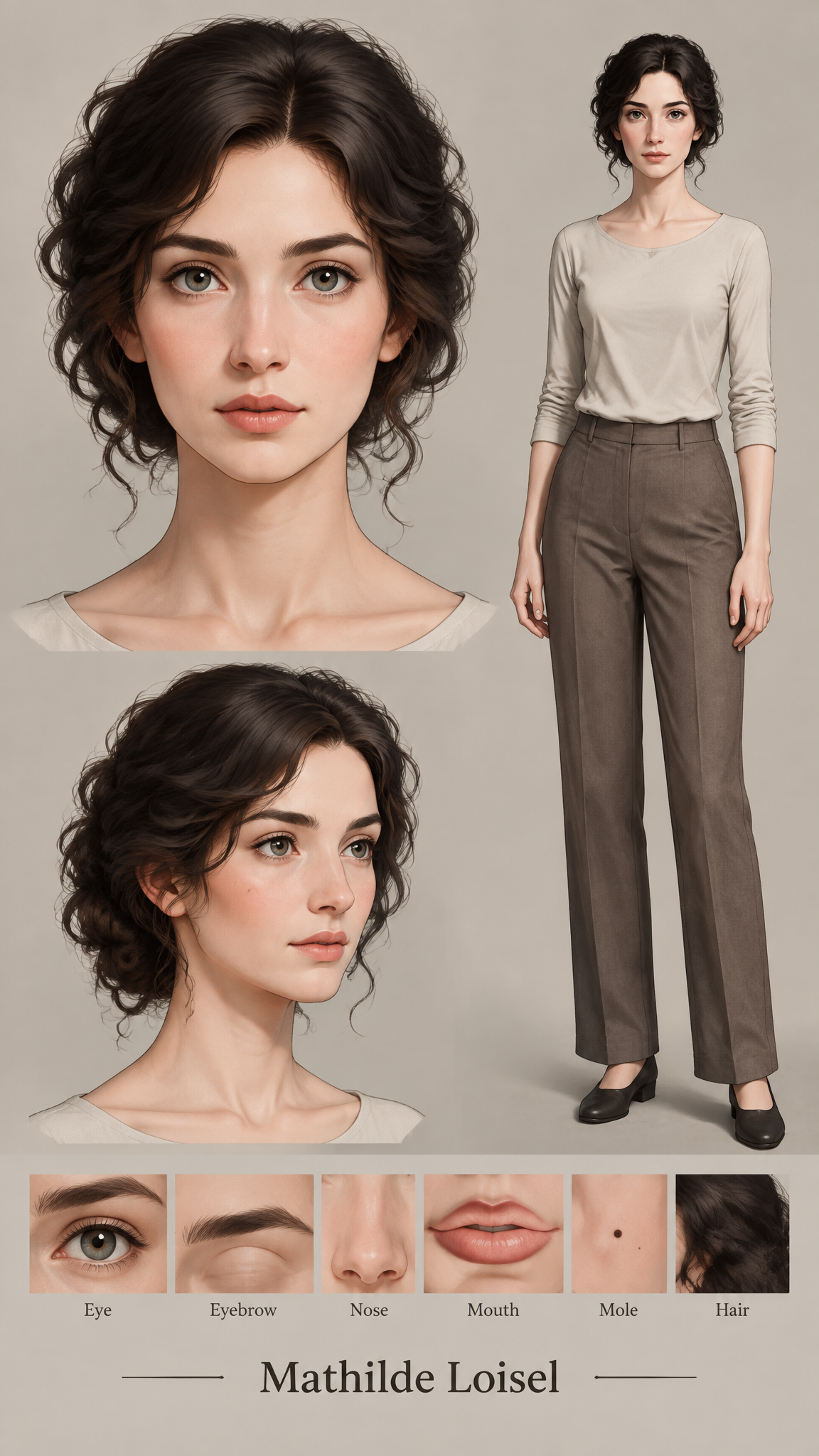
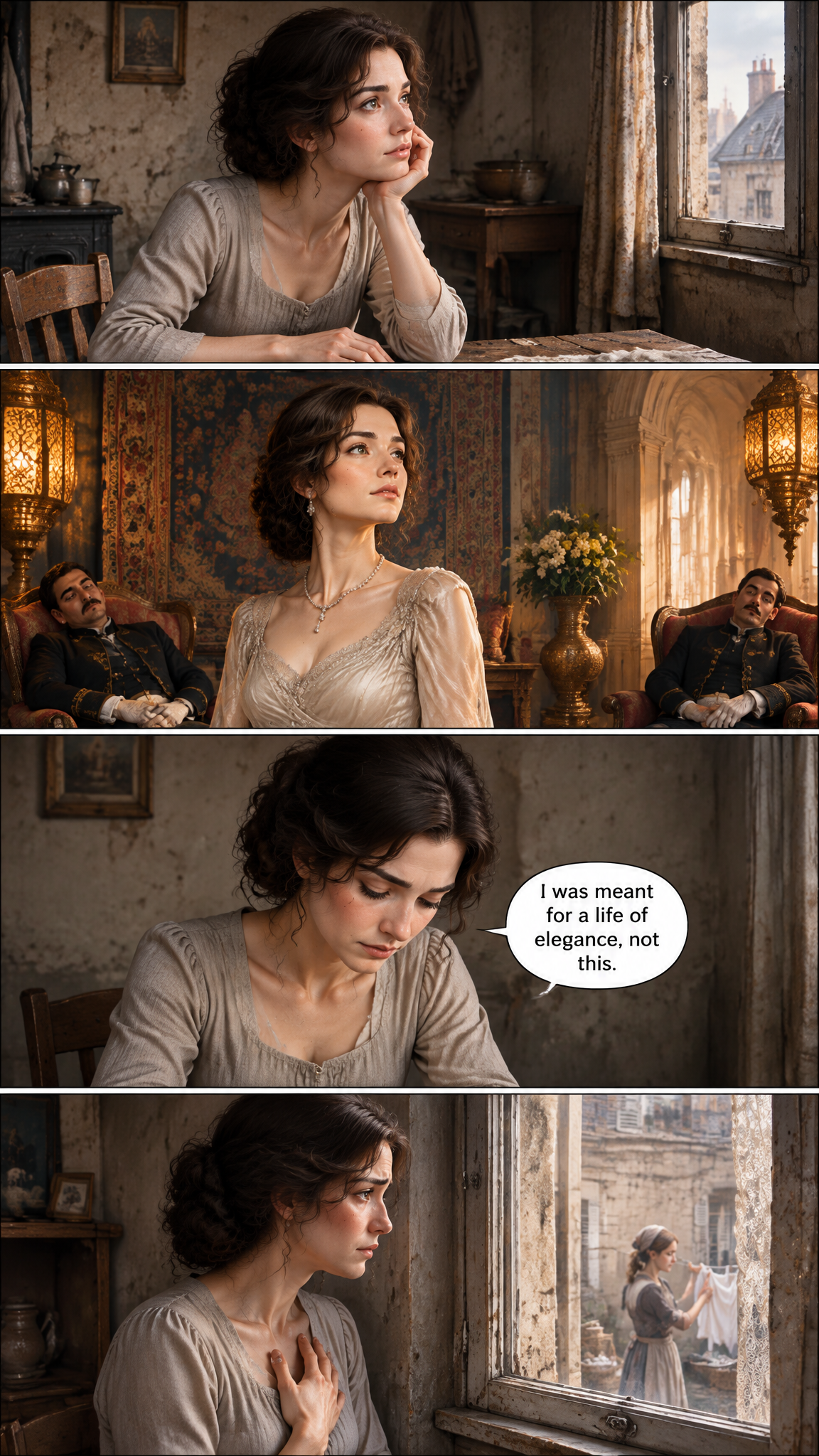
There are no character sheets yet. I'll draw Mathilde and her husband first — they carry the whole story — then chapters 1 and 2, about 2 pages each.
-
Drawing characterMathilde Loisel
-
Drawing characterMonsieur Loisel
-
Drawing a comic page1
-
Drawing a comic page1
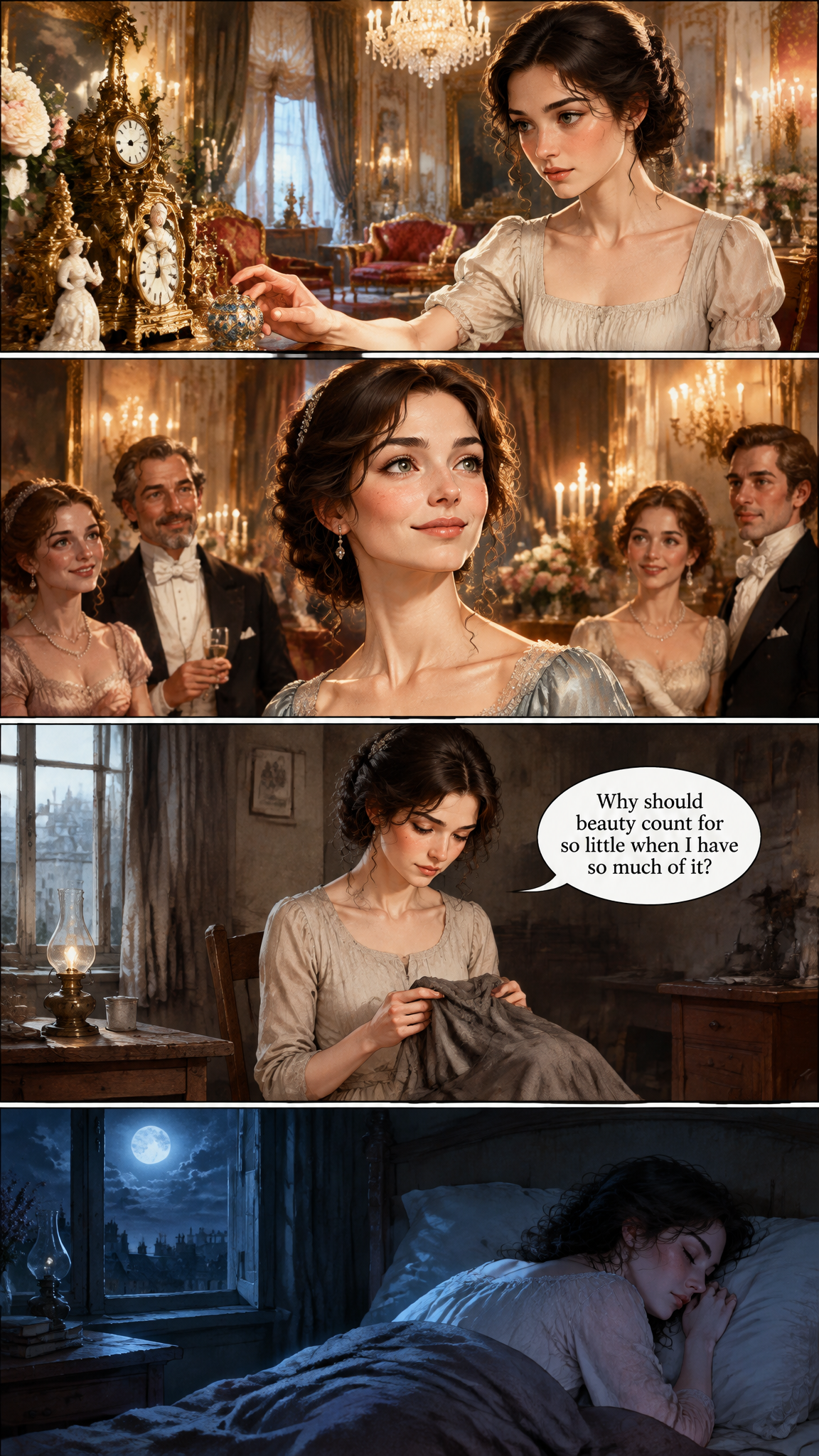
Three short requests later the whole story was drawn: 21 pages across ten chapters, from 3 character sheets. Madame Forestier, who lends the necklace, got her sheet only when she first appears, in chapter 4. Most chapters took two pages; chapter 9, where the Loisels spend ten years paying off the debt, took three.
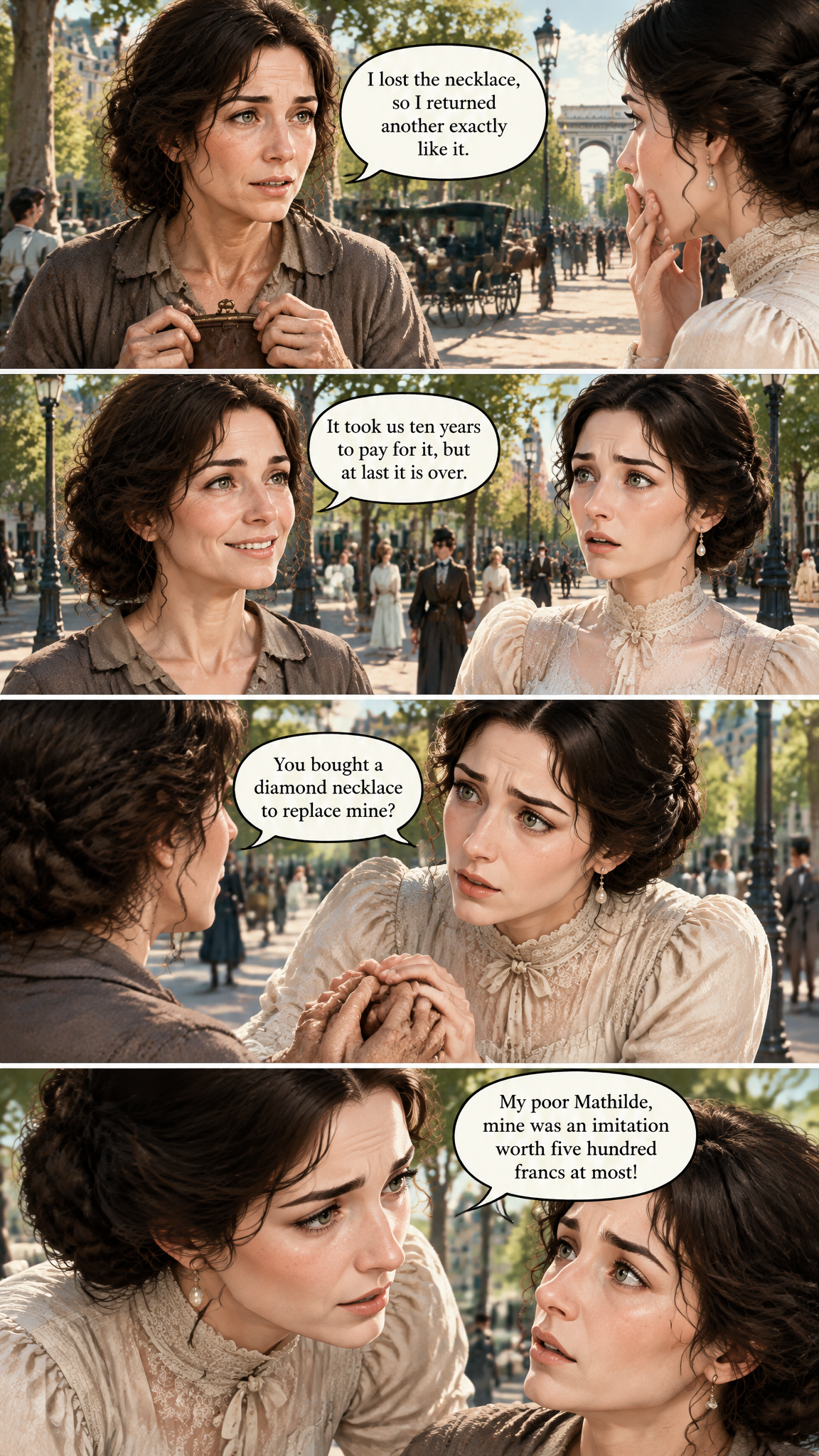
At normal quality that comes to 24 images — 240 credits — for a complete comic of a famous story.
See the whole conversation and all the pagesHow to adapt your own pick
- Get a clean text: the original, or a public-domain translation, saved as a TXT file.
- Create a project. Choose the art style that fits the period and mood, a page shape, and the comic language for the speech bubbles.
- Import the text. Shorter chapters — around 1,000 characters each — give the assistant a scene or two at a time.
- Ask for the first chapters. The assistant draws the recurring characters first, then the pages.
- Check the character sheets in the material library before going further. Redrawing a sheet now is cheaper than redrawing pages later.
- Ask for the rest, a few chapters at a time, then download every page as one ZIP.
Frequently asked questions
What does public domain mean for a comic adaptation?
A story in the public domain has no copyright any more, so anyone may adapt it, draw it and sell the result without permission. Your comic is then your own adaptation; other people can make theirs of the same story too.
Which stories are in the public domain in the US?
As of 2026, works published in the US in 1930 or earlier are in the public domain, along with older works from elsewhere. Later works may be too, but you would have to check each one.
Can I use any translation of a public domain story?
No. A translation is a work of its own and can still be in copyright long after the original is free. Use an old translation that is itself in the public domain, or translate the original yourself.
Can I draw a famous character the way a film showed them?
Be careful. The story can be free while a well-known film or cartoon version of the character is still protected. Draw characters from the descriptions in the text, not from a later adaptation.
How long does it take to turn a short story into a comic?
With the comic assistant, a ten-chapter short story took under twenty minutes from the first request to the last page, over three short requests. Reading and checking the pages takes longer than the drawing.
Pick a classic and draw it
A short story is a comic you can finish this week.
Turn a story into a comic