
Consistent characters in AI comics
AI comics where your characters keep their faces
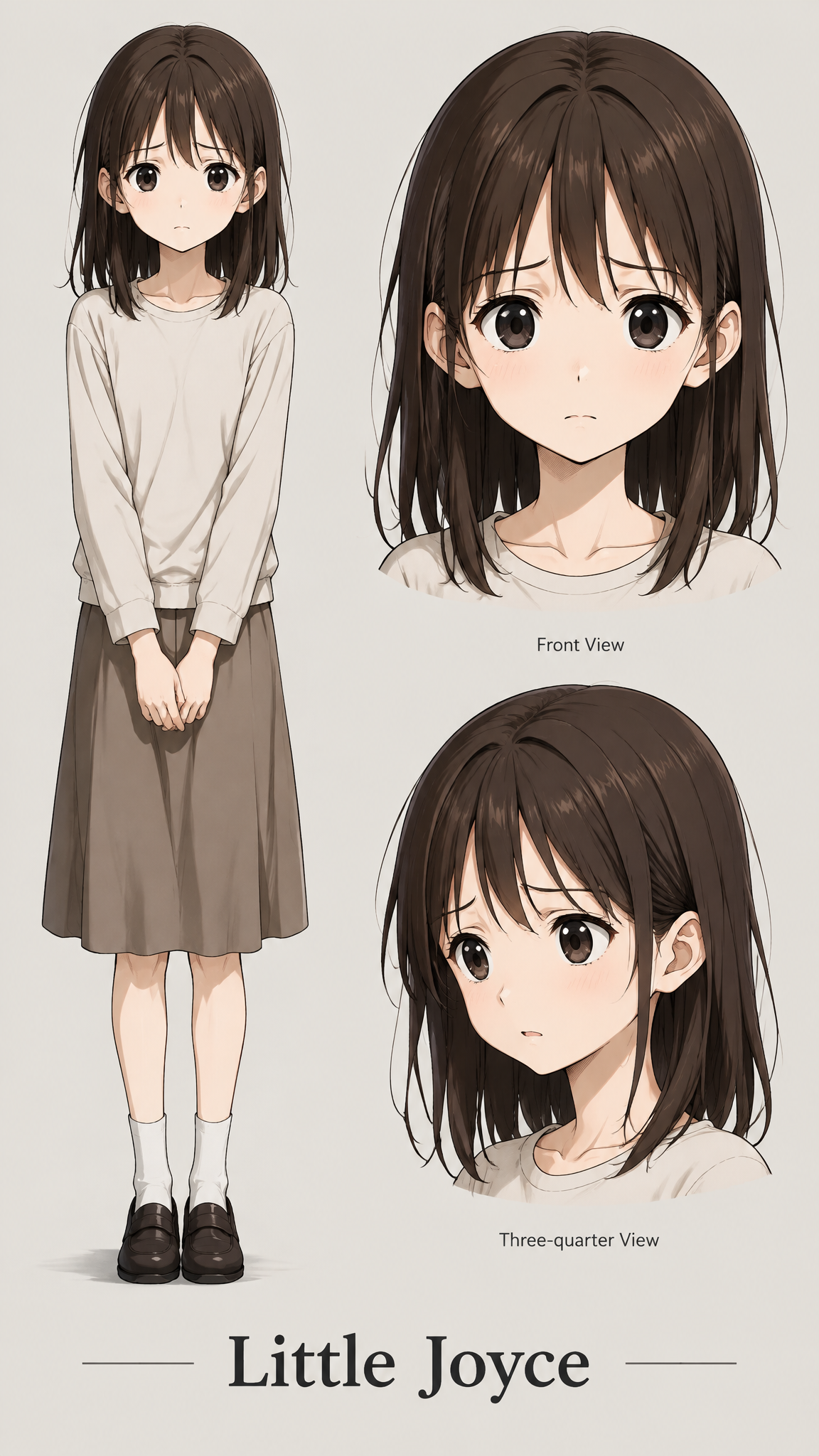
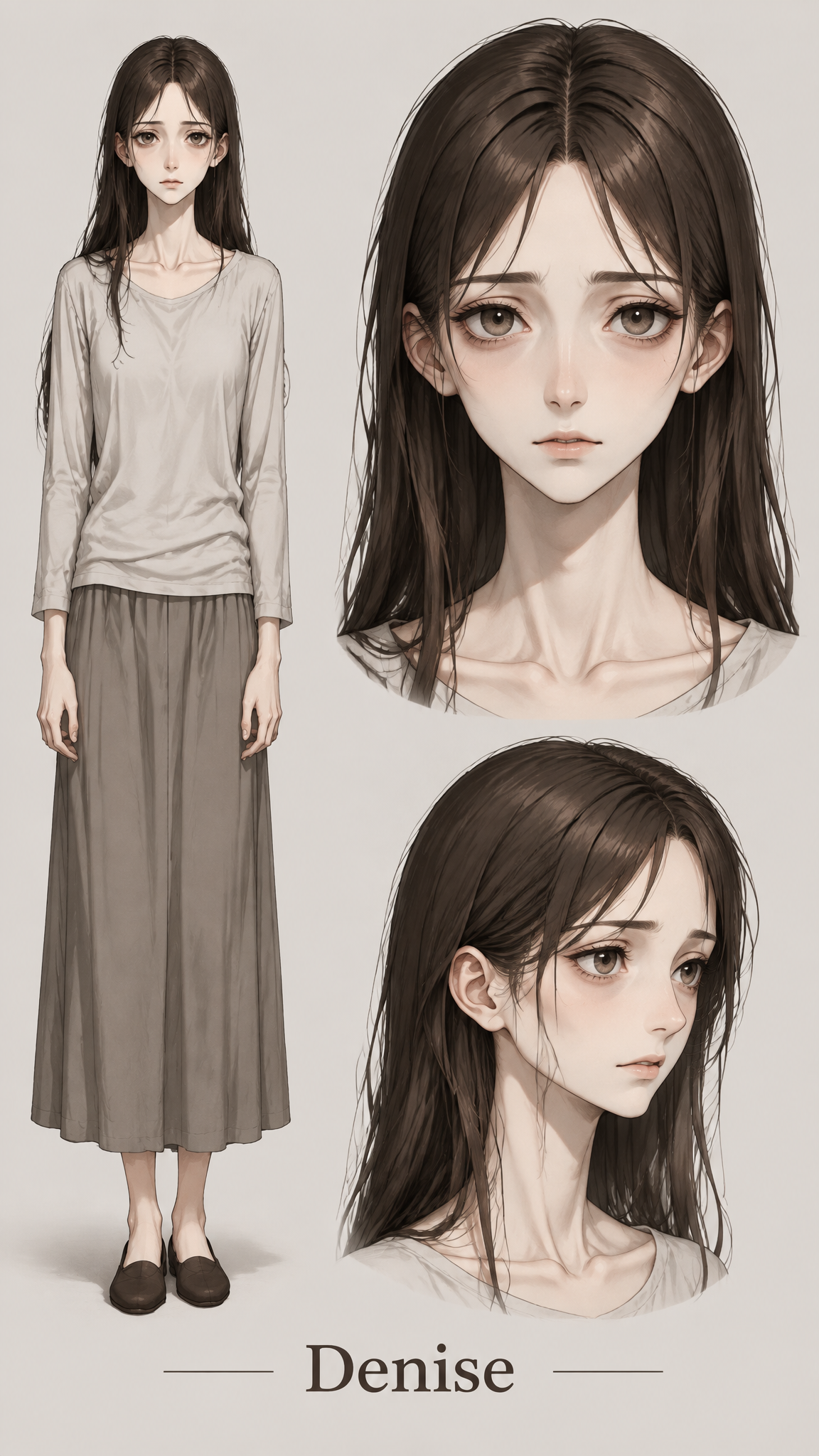
A recurring cast needs more than a good first portrait. The assistant uses character reference sheets when drawing later pages. Compare the real examples below to see what carries across scenes and what still needs review.
- No drawing
- No prompts to write
- Reusable character references
- No subscription
A real comic adaptation
Follow Little Joyce from chapter 1 to chapter 10
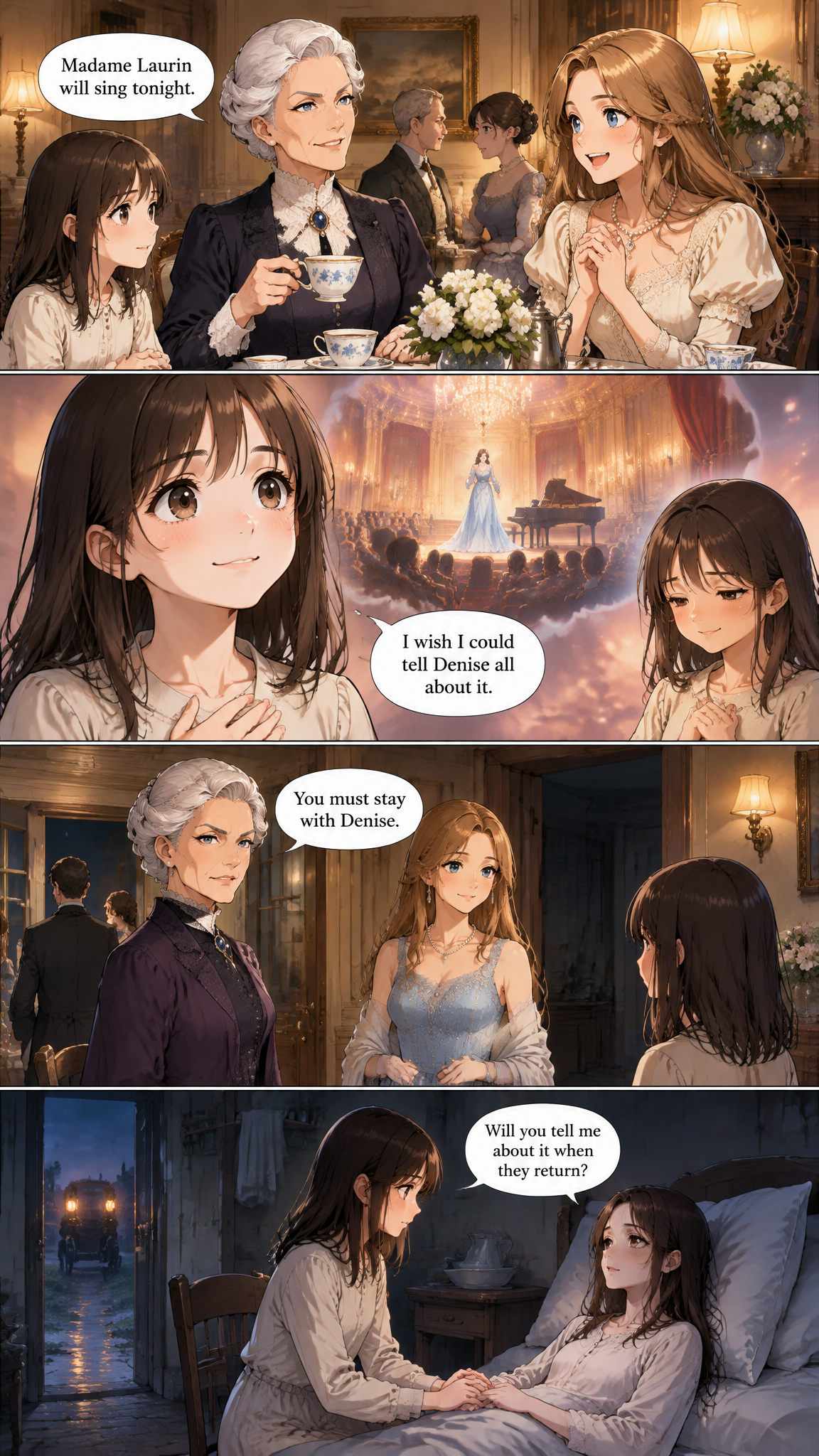
The Little Black Doll gives you a concrete cast to compare. Start with Little Joyce and Denise's reference sheets, then inspect Joyce in the opening scene, at Denise's bedside and near the end of the story.
The Little Black Doll · L. M. Montgomery
Japanese anime style · English dialogue · 9:16 portrait
The character references
Read the generated pages
Open any image to read it at full size. Chapter numbers refer to the project's imported text sections.
Imported chapter 1
Imported chapter 4
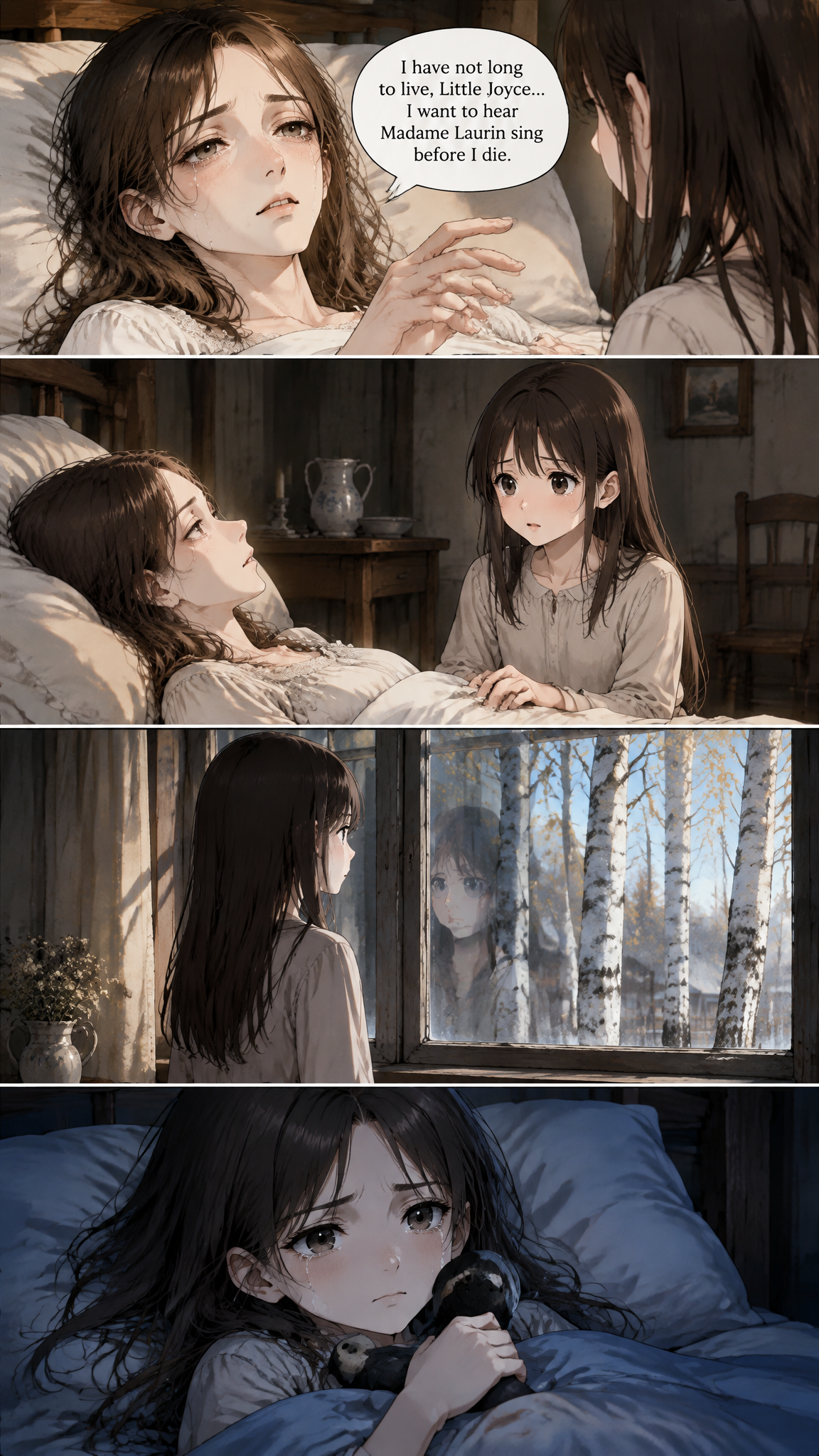
Imported chapter 10
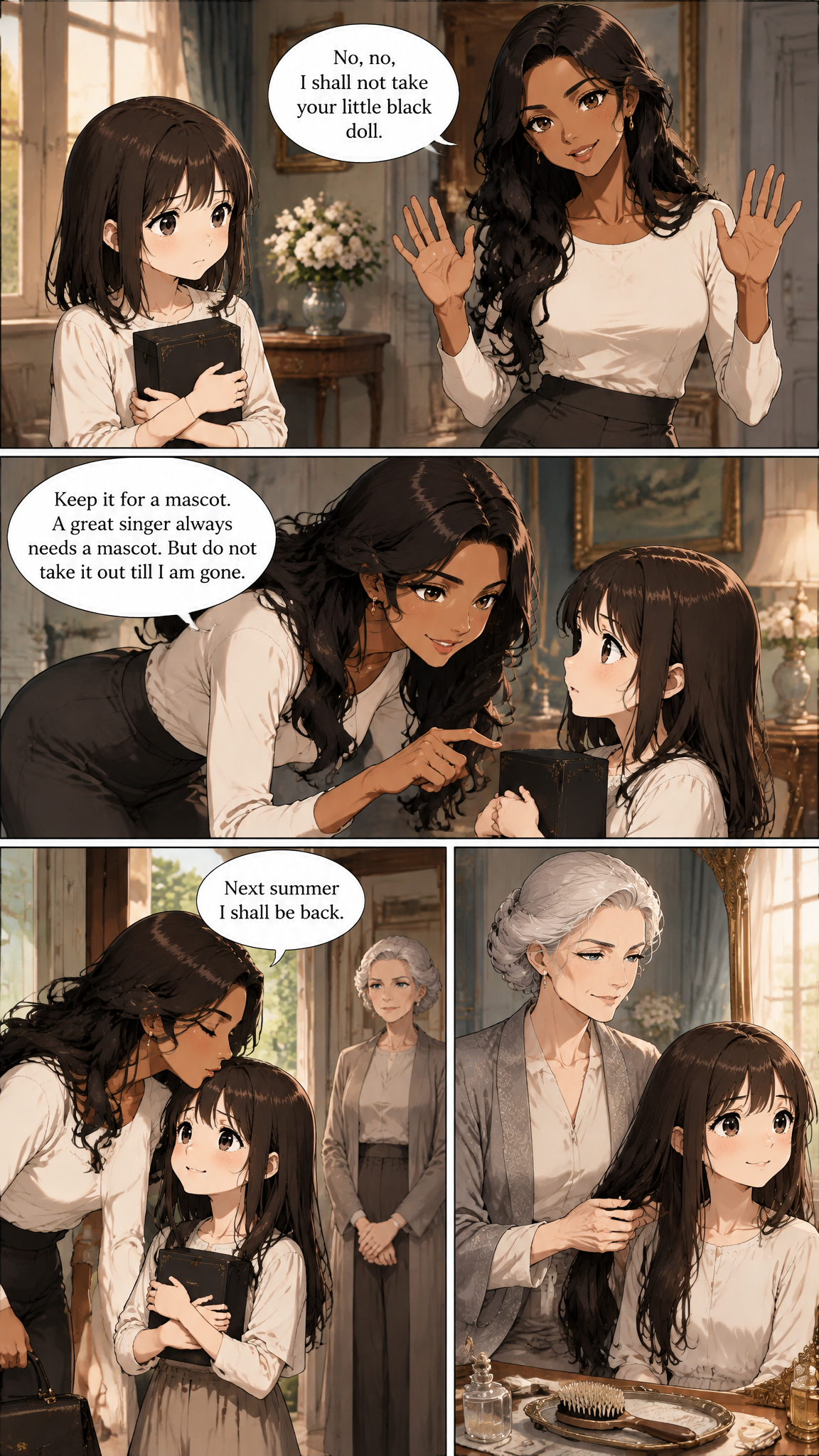
- Compare identity across scenes
- Use the reference sheets to compare Joyce's fringe, eyes and facial proportions in chapters 1, 4 and 10. Lighting, pose and expression change with the scene.
- Check more than one person
- Joyce and Denise appear together at the bedside. A useful test is whether you can still tell the characters apart when both are in the frame.
- Look for differences, too
- Clothing details vary in this sample. Compare Grandmother Marshall's outfit in chapters 1 and 10: the pages are not evidence of a perfect costume lock.
Reference sheets help maintain continuity; they do not guarantee identical faces, outfits or props in every panel. Review each page and budget for redraws when a detail matters.
See more pages from this project on the home pageHow it works
Three steps from text to pages
- 1
Bring your story
Paste a scene or upload a novel. The assistant reads who appears and who keeps coming back.
- 2
Characters get reference sheets
Each recurring character is drawn once in the outfit they wear in the story — face, body and costume — with their name on the sheet. You can see and redraw every sheet in your library.
- 3
Pages reuse the sheets
The assistant attaches character references when drawing pages. They guide the face, build and outfit, while expression, pose and action come from the scene. Check the result for differences.
Why it works
What makes the pages worth reading
Outfit references for recurring characters
A sheet records the outfit as well as the face. For a lasting second outfit, the assistant can add another sheet under the same name. Small clothing details can still drift and may need a redraw.
Versions for real changes
When the story ages someone, scars them or skips years, a new version is added from that chapter. Redraw an early chapter and it still uses the earlier look.
Group scenes that hold
One page can draw from several character sheets at once, so a party of four stays recognizable together.
Places stay the same too
Locations the story returns to can get their own background reference, so the tavern looks like the same tavern.
Who uses it
Made for people who already have the story
Anyone making a multi-page comic
The moment a comic has a second page, consistency matters.
Novelists and serial writers
A cast that has to survive hundreds of chapters.
People who tried other AI tools
If your hero had a new face on every image, this is the problem that is solved here.
Creators planning videos
Consistent pages make consistent clips when you animate them.
Frequently asked questions
How does it keep characters consistent?
Each recurring character has a reference sheet. Every page that shows them is drawn with that sheet attached, so the face is taken from the same source every time.
What if I do not like how a character looks?
Edit their description or ask for the sheet to be redrawn. Every page drawn afterwards uses the new sheet.
Will changing clothes break consistency?
A reference sheet includes the character's usual outfit. A one-off change can be described in the scene; a lasting second outfit can have its own sheet. Review the pages, because references do not guarantee every clothing detail.
Does it stay consistent over a whole novel, not just a few pages?
Sheets remain in the project's library for later chapters. A lasting change can have a new version from a specified chapter, while earlier chapters keep the earlier reference. This preserves the reference history, not a guarantee that every generated detail will match.
What about side characters?
A passer-by who appears once is described in the panel rather than given a sheet. Anyone who keeps coming back gets one.
Your story is ready. The pages are not, yet.
Start a project, bring a chapter, and ask for it to be drawn.
Start my comic